

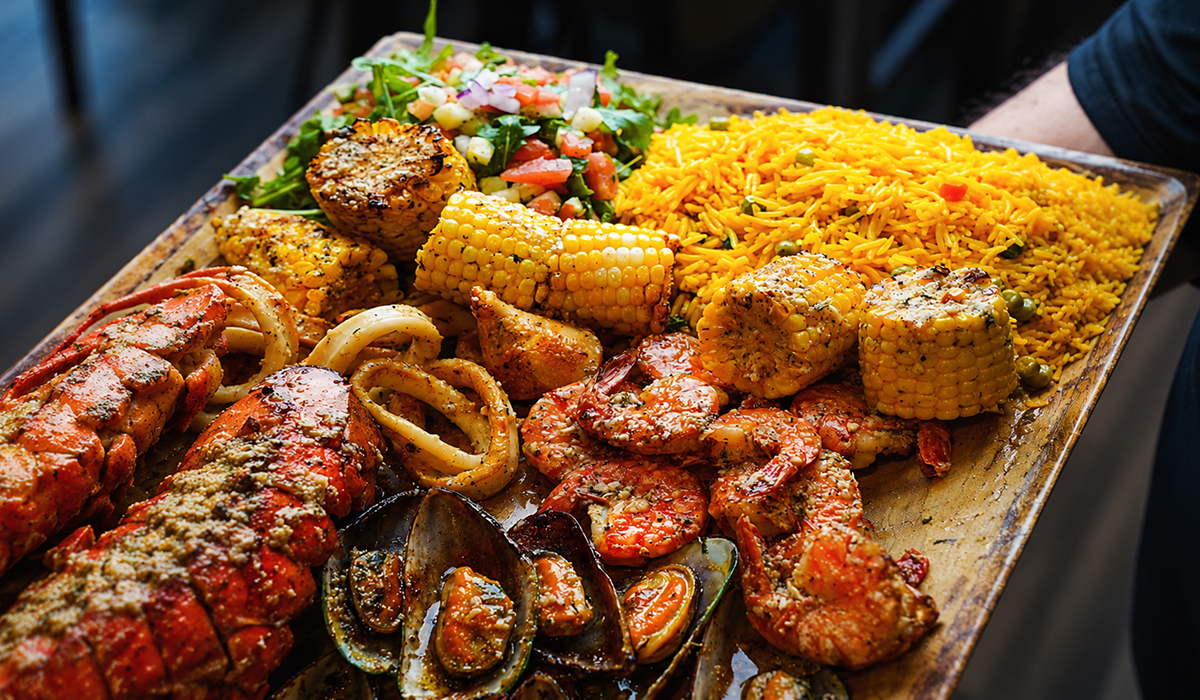
Most people ask this question right after finishing a full tray of shrimp, lobster tail, and mussels. They push the empty box aside and wonder if they just made a terrible dietary decision.
The honest answer? Probably not.
A seafood boil gets hyped because of how it looks, heaping trays of shellfish, seasoned sauces, corn, and rice piled together. It feels indulgent. But the actual nutritional story is more nuanced than most people expect.
This blog breaks it down properly. We look at the calories, the real health benefits, and how to enjoy a seafood boil in a way that does not leave you feeling guilty afterward. And since we are the ones cooking it for you here at Mermaid Fish & Grill House in Mississauga, we think it is worth being straight with you about what goes into your tray.
What Actually Goes Into a Seafood Boil?
Before you can judge whether a seafood boil is healthy or not, you need to look at what is actually in it.
A traditional seafood boil is built around shellfish. Shrimp, crab, mussels, lobster tail, calamari. These are all lean, protein-rich proteins with low saturated fat content. They are not the concern.
The sides and sauces are where the conversation gets more complicated.
At Mermaid Fish & Grill House, every boil platter starts with the seafood itself. Depending on the size you order, your tray includes shrimp, calamari, mussels, and lobster tail:
- 1lb – 5 pcs shrimp, 5 pcs calamari, 5 pcs mussel, and 1 pc lobster tail
- 2lb – 10 pcs shrimp, 10 pcs calamari, 10 pcs mussel, and 2 pcs lobster tail
- 3lb – 15 pcs shrimp, 15 pcs calamari, 15 pcs mussel, and 3 pcs lobster tail
You can substitute mussel or calamari with shrimp if you prefer.
For sides, you choose two from salad, fries, brown rice (sayadeya), yellow rice, or corn. You also pick your flavour and heat level. That level of control matters more than most people realize when it comes to how healthy your meal actually ends up being.
Is a Seafood Boil High in Calories?
This is the question most people are really asking when they want to know if a seafood boil is unhealthy.
According to detailed nutrition analysis, a traditional seafood boil can exceed 1,100 calories, 57 grams of fat, and 2,600 mg of sodium per serving. That sounds alarming until you understand what is driving those numbers.
It is not the shrimp. It is not the lobster tail. The calorie spike comes from butter-heavy dipping sauces, heavy seasoning, processed sausage added to the boil, and oversized portions of starchy sides.
The healthiest version of a seafood boil tilts heavily toward shellfish, uses seasoning with some restraint, skips sausage, and keeps butter to a minimum. That version is high in protein, low in fat, and genuinely nutritious.
What are the Real Health Benefits of Eating Seafood Boil?
This is where the nutrition case for seafood boils gets strong.
Seafood is one of the best dietary sources of omega-3 fatty acids. Omega-3s support heart health, help lower the risk of heart disease and stroke, and support brain function. They reduce inflammation and help regulate blood pressure and triglycerides.
A 2020 review covering 34 studies found that higher fish and shellfish consumption was linked to a lower risk of coronary heart disease, heart failure, stroke, depression, and liver cancer. It also found a lower risk of death from all causes. That is a significant body of evidence.
Beyond omega-3s, the seafood in a boil delivers:
- High-quality protein that keeps you full and supports muscle health
- Vitamin B12, which supports nerve function and red blood cell production
- Zinc, which strengthens immune function
- Selenium, an antioxidant that supports thyroid health
- Vitamin D, important for bone health and immune response
Mussels, shrimp, and lobster tail are also low in saturated fat, making them a better protein option than red meat for people managing their cholesterol or weight.
The vegetables and spices in the boil add their own value. Corn and potatoes bring fiber that supports digestion. Spices used in Cajun and tajine blends carry antioxidant properties.
What Makes a Seafood Boil Unhealthy – And How Do You Avoid It?
Let us be direct about this.
Dipping sauces made from melted butter can add 100 calories per tablespoon, and most people use several. When you combine that with heavy Cajun seasoning blends, which are loaded with sodium, and pile on starchy sides, the meal stops being lean and starts being excessive.
One serving of a seasoned seafood boil can pack more than half your recommended daily sodium intake. For people with high blood pressure or pre-existing heart conditions, that is worth paying attention to.
The main culprits are:
- Excess butter and cream-based sauces
- High-sodium seasoning used in large quantities
- Too many starchy sides eating into your plate space
- Oversized portions that push past what your body needs
Here is how you keep it balanced. At Mermaid Fish & Grill House, choosing the Lemon & Garlic flavour gives you a cleaner, brighter profile without the heavier sauce load of a Cajun or butter blend. The Mermaid Sauce is bolder and richer, so portion awareness matters more with that one. Picking salad as one of your two sides and skipping fries is another easy adjustment that keeps the meal on the healthier side without sacrificing anything on taste.
How Often Should You Eat Seafood Boil?
There is no need to treat a seafood boil like a cheat meal you need to earn.
Enjoying a seafood boil once or twice a month works well for most healthy adults. Eating it more frequently is not automatically a problem either, as long as you are keeping portions reasonable and making smart choices on sides and sauces.
Seafood is not a guilty pleasure you need to apologize for. It is one of the most nutrient-dense proteins on the planet.
Which Seafood Boil Should You Try at Mermaid Fish & Grill House?
Choosing your flavour at Mermaid Fish & Grill House is actually one of the more meaningful decisions you make for your meal, both in terms of taste and health profile.
Lemon & Garlic
This is the lightest option. It works well for guests who want the full seafood boil experience without heavy sauce. It is also the better choice for anyone watching their calorie or fat intake. The natural acidity of lemon keeps the flavour strong without needing a rich base.
Mermaid Sauce (Cajun & Tajine)
This is the bold option. Cajun seasoning and aromatic tajine spices create a deeper, more layered flavour profile. It is richer and more complex. Just be mindful that Cajun blends carry more sodium. If you love this flavour, balance it by choosing lighter sides.
Mermaid Fried
This version leans into the crispy texture angle. It is the most indulgent of the three and best treated as an occasional option rather than a regular order. The fry component adds calories and fat that the boiled versions do not carry.
Across all three, you still choose your heat level, Mild, Spicy, or Fire and your two sides. The fried option is not available with mussels, noted right on the menu.
The Mermaid Fish & Grill House menu is built to give you real choice. Whether you are eating for nutrition, eating for indulgence, or trying to find the middle ground, the options support all three.
FAQs
How many calories are in a seafood boil platter?
The seafood itself runs around 100 to 120 calories per 100 grams. A full platter with sides like rice, corn, and salad typically sits between 600 and 900 calories. Add heavy sauces and large butter portions and that number can push past 1,100 calories. The seafood is not the calorie problem. The add-ons are.
Is seafood boil high in sodium?
Cajun and spiced seasoning blends can push a single serving well over half your recommended daily sodium intake. If you are watching your salt, choose lighter seasoning, go with the Lemon & Garlic flavour, and pick salad as a side. You still get a full, satisfying meal with a lower sodium load.
Where can I get a seafood boil in Mississauga?
Mermaid Fish & Grill House at 4700 Ridgeway Drive, Unit 72 in Mississauga serves customizable seafood boil platters with Lemon & Garlic, Mermaid Sauce, and Mermaid Fried options. We offer dine-in, pickup, and delivery for guests across Mississauga and the GTA.
Does Mermaid Fish & Grill House serve healthy seafood boil options?
Yes. Every platter is built around shrimp, calamari, mussels, and lobster tail. Guests choose their size, flavour, heat level, and two sides. You can keep your order lean by choosing the Lemon & Garlic sauce, picking salad and rice as your sides, and sticking to a 1lb or 2lb portion. The restaurant gives you real control over how your meal comes together.
What is the healthiest way to eat a seafood boil?
Keep the shellfish at the center of your plate. Choose Lemon & Garlic over heavier sauce options. Pick salad and rice as your sides instead of fries. Drink water with your meal. Skip the extra butter. The seafood is doing the nutritional heavy lifting. Let it.
Does Mermaid Fish & Grill House serve the GTA?
Yes. Mermaid Fish & Grill House is located in Mississauga and serves guests from Brampton, Oakville, and the surrounding GTA.